



So, in news that feels like the plot of a low-stakes political rom-com, Canada has voted. Again. And just when it seemed like the Liberals were heading straight to the graveyard of political irrelevance, they rose from the ashes like a maple-scented phoenix and… won.
Their secret weapon? Not charisma. Not policy. Not even poutine-based populism.
Nope. They brought in a central banker.
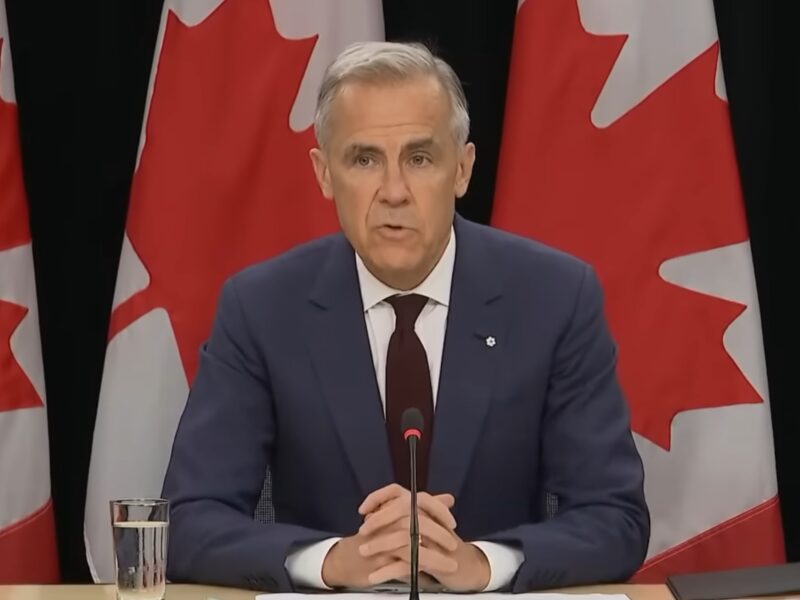
Ladies and gentlemen, meet Mark Carney—the man who beat Pierre Poilievre, charmed voters without cracking a smile, and (accidentally) owes his win to Donald Trump, who apparently moonlights as Canada’s top Liberal campaign strategist now.
Let’s explain what happened, how the election works (because LOL it’s not straightforward), and who this money whisperer named Carney actually is.
Wait, Who’s Mark Carney?
Imagine if James Bond traded in his Aston Martin for a calculator and started giving TED Talks about interest rates. That’s Mark Carney.
He’s a Canadian economist, former Governor of the Bank of Canada, and also the Bank of England—because apparently, Canada is exporting central bankers now. He has the energy of someone who silently judges your mortgage choices while sipping a lukewarm flat white.
Carney is the anti-politician politician: he speaks like a spreadsheet, dresses like a Davos panelist, and somehow came out looking like the adult in a room full of toddlers with Twitter accounts.
In other words, he was exactly what Canadians wanted after a decade of Justin Trudeau’s eyebrow drama and Pierre Poilievre’s permanent podcast rage.
The Setup: A Political Murder Mystery (With Maple Syrup)
Flashback six months ago: The Liberal Party was deader than Blockbuster. Trudeau’s approval rating was hanging out with bed bugs at -52, and Poilievre’s Conservatives were up by 25 points and already measuring the curtains at 24 Sussex Drive.
The NDP was doing what the NDP always does: being there.
And then, from the depths of Truth Social, Trump decided to try some international trolling, suggesting Canada should become America’s 51st state. Because nothing screams “diplomatic outreach” like unsolicited annexation fantasies from a man who thinks Hamilton is a documentary.
Suddenly, Canadians were like, “Wait, we might actually need someone stable at the wheel.” And boom—Mark Carney moonwalks onto the political stage like a budget Batman, promising calm, competence, and zero TikTok presence.
How Canadian Elections Actually Work (Yes, It’s Weird)
Canada doesn’t do “popular vote wins.” That’s too easy.
Instead, they use a system called first-past-the-post, which sounds like a horse race and functions about as sensibly. Here’s how it goes:
- Canada is chopped into 343 ridings (like voting districts, but more polite).
- In each riding, the candidate with the most votes wins, even if that’s only 34% and the other 66% wanted literally anyone else.
- This means national vote totals don’t matter. It’s all about where you win, not how many people like you overall.
This system heavily benefits the Liberals, whose support is nicely spread across cities like Toronto, Vancouver, and Montreal—aka where the humans live. Meanwhile, Conservative votes are concentrated in the parts of Canada where there are more cows than people (hi, Alberta and Saskatchewan!).
So despite only beating the Conservatives in the popular vote by 1.4%, the Liberals got 166 seats to the Conservatives’ 146. Because democracy is not a math contest. It’s a game of geographical Tetris.
And the NDP? Oh Honey…
The New Democratic Party had a rough night. Like, “forgot their lines on live TV” rough.
They scored just 6.1% of the vote and ended up with 7 seats. For comparison, last time they got 25 seats and almost 18% of the vote. Jagmeet Singh took the hint and resigned—probably to pursue his true calling as a fashion influencer.
Meanwhile, the Bloc Québécois (Canada’s answer to “what if nationalism, but make it French?”) did okay, winning 23 seats—most of them yanked away by Carney’s Liberal heist.
So, Mark Carney Won. Now What?
Here’s the kicker: the Liberals still don’t have a majority. They needed 172 seats. They got 166. So it’s minority government time, baby!
Which means Carney now has to play political Jenga—cutting deals, shaking hands, and maybe begging the NDP (or what’s left of them) for support. Trudeau did this dance back in 2021 with a “confidence and supply” agreement that lasted almost three years before it collapsed like a Jenga tower during an earthquake.
The problem? Carney is more centrist than Trudeau, and the NDP is currently assembling a new leader from spare parts found in a Che Guevara museum. So… good luck with that, Mark.
Trump: The MVP of Canadian Liberalism
Let’s not forget the real hero of this story: Donald J. Trump.
If he hadn’t gone full “Annex Canada” mode on Truth Social, this whole thing might’ve stayed a boring debate about interest rates and potholes. But thanks to his unhinged interjections, the campaign turned into a geopolitical panic attack.
Carney just happened to be the guy with the best résumé and the fewest YouTube rage compilations.
So, in a weird twist of fate, the Liberals owe Trump a thank-you card. Or maybe just a gift basket of ketchup chips and passive aggression.
Final Thoughts: Canada Chose the Banker, Not the Screamer
Canada decided it didn’t want angry men with slogans. It wanted a guy who reads footnotes for fun.
Mark Carney now has the job of running a minority government, navigating whatever fresh chaos the world throws at him, and somehow doing it all while still looking like he’s judging your inflation-related life choices.
Meanwhile, Poilievre is probably screaming into a microphone about central banks, and Trump is wondering why his “Welcome to the United States of America, Eh?” plan didn’t work.
As for the rest of us? We’re just watching the show with popcorn—and maybe a calculator, because apparently, central bankers are hot now.
Is Canada the only country that elects technocrats when Trump yells too loud? Would you let Mark Carney refinance your life? Slide into the comments or @ us with your conspiracy theories. We promise not to annex your opinions.