

An outsider’s guide to the election next door and why the biggest question may not be who wins
There is something slightly surreal about living in Victoria Falls and watching a major national election unfold literally across the river. From where I am, Zambia is not some distant country on a map that occasionally appears in international headlines. Livingstone is close enough that you can have breakfast in Zimbabwe, cross the border, and be discussing Zambian politics before lunch.
And right now, Zambia is having one of those political moments where everyone seems to have an opinion, several people have a theory, and absolutely nobody wants to be the person who says, “Well, let’s wait and see.”
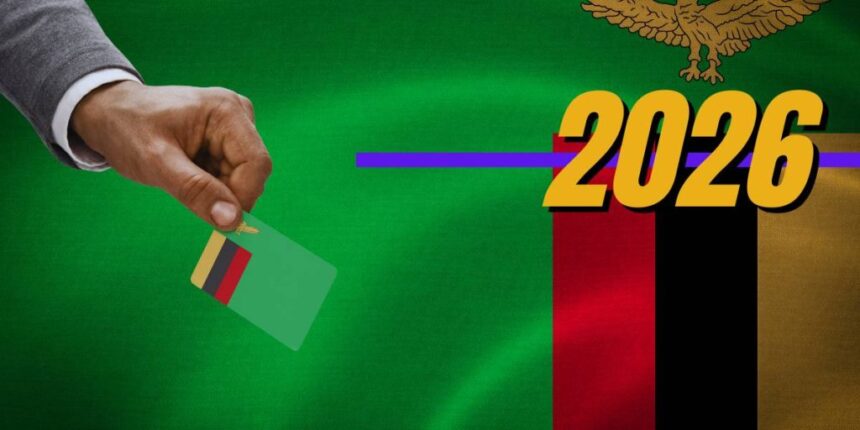
Zambia goes to the polls on 13 August 2026 to elect a president, members of parliament and local government representatives. The country has more than eight million registered voters, and this election comes with some significant changes to the electoral system.
But the most important question may not be:
Who will win?
It may be:
Will the people who lose believe that the people who won actually won?
And that is a much harder question.
First, let’s explain the election without making your head hurt
If you are not Zambian, you could be forgiven for looking at the country’s political landscape and thinking:
“Okay… so who exactly am I supposed to be following here?”
Fair question.
At the top of the ballot is President Hakainde Hichilema, leader of the United Party for National Development, or UPND. Hichilema is seeking a second term after his dramatic victory in 2021, when he defeated then-President Edgar Lungu.
That election mattered well beyond Zambia.
Lungu’s Patriotic Front had been in power, but Hichilema won and Zambia experienced a peaceful transfer of power. For a continent that has occasionally treated presidential handovers as an activity requiring military vehicles, tear gas and several emergency press conferences, Zambia’s 2021 election was something of a democratic success story.
Five years later, Hichilema is no longer the outsider promising change.
He is the establishment.
And that changes everything.
The man who promised change is now the man being judged
This is probably the simplest way to understand the 2026 election. In 2021, Hichilema could say:
“Look at what they have done. Give us a chance.”
In 2026, voters can reasonably respond:
“Okay. We gave you the chance. What did you do with it?”
That makes this election partly a referendum on Hichilema’s economic record. There are things the government can point to.
Zambia has made progress on debt restructuring, inflation has fallen substantially from its earlier highs, and the country has attracted significant mining investment. Copper is particularly important: the sector accounts for roughly 70% of Zambia’s export earnings and more than 10% of GDP.
But there is an awkward little problem with economic statistics.
People have to live inside the economy.
A government can tell you inflation is falling while someone in Livingstone is telling you groceries are still expensive. A minister can talk about copper production while a household is wondering when the electricity will come back. A spreadsheet can say the economy is improving while a young person is still looking for a job.
That disconnect is going to matter.
Reuters recently described the election as a test of whether Hichilema’s economic recovery can translate into sustained, job-creating growth.
In other words:
The economy may be improving. The question is whether ordinary Zambians feel improved.
And then there is the elephant in the room: trust
I found a recent DW podcast conversation with Brown Kasaro, the Chief Electoral Officer, particularly interesting. Kasaro’s argument is essentially straightforward:
The Electoral Commission of Zambia, the ECZ is operating according to the law. Votes will be counted at polling stations. Candidates can appoint polling agents. Observers can monitor the process. Results are transmitted through the electoral system.
The ECZ says results will be published through its official channels as they are verified and the presidential result is expected to be declared within 72 hours of the closing of the last polling station.
On paper, that sounds reassuring.
And frankly, it should be.
But elections are not mathematics alone.
They are also psychology and if voters don’t trust the referee, explaining the rules louder doesn’t necessarily make them feel better.
As Kasaro pointed out in the interview, the ECZ is constitutionally established as an independent institution. The President appoints the chairperson and commissioners, but those appointments are subject to ratification by the National Assembly.
The opposition and civil society, however, have raised questions about how independent an electoral body can truly be when the executive plays a role in appointing its leadership.
That is the heart of the argument.
It isn’t necessarily:
“The ECZ is rigging the election.”
It is:
“Can we be absolutely certain that the referee isn’t favouring one team?”
Those are two very different claims.
And the second question deserves to be asked even if the first cannot be proven.
Then somebody decided 156 constituencies weren’t enough
This is probably the part of the election that anyone outside Zambia really needs explained. Zambia previously had 156 parliamentary constituencies. For this election, that number has increased to 226. That’s 70 new constituencies.
Yes.
Seventy.
The government and ECZ say the changes are part of a constitutional and electoral reform process designed to improve representation and account for population and geographical considerations. The ECZ says the delimitation process involved consultations across the country.
That is the official explanation. And there is nothing inherently suspicious about changing electoral boundaries. Population changes. Cities grow. Communities change. Representation sometimes needs adjusting. If a constituency becomes enormous and another is tiny, somebody eventually has to redraw the map.
The problem is timing and perception.
Because when you change electoral boundaries before an election, people naturally start asking:
Who benefits?
Critics have argued that the new constituencies could favour the ruling party because some of the areas receiving additional constituencies are considered UPND-friendly. The ECZ rejects the suggestion that the boundaries were politically designed and says the process was conducted using constitutional criteria including population and geographical considerations. It also says public consultations were held.
And here we arrive at one of the great problems of democracy:
Sometimes doing something legally doesn’t automatically make everybody trust why you did it.
That is the distinction between legality and legitimacy.
The ECZ can say:
“We followed the law.”
Critics can respond:
“Fine. But why did you do it this way, at this time?”
Both questions can exist simultaneously.
The election referee has an extremely difficult job
The same podcast interview with Brown Kasaro made one thing very clear. The electoral commission is going to have to do more than conduct an election. It is going to have to communicate an election.
There are 13,529 polling stations, according to the ECZ, and counting takes place immediately after voting at each polling station. Candidate agents can be present, and observers can monitor the process. That is important.
Because the modern election doesn’t end when the last ballot is placed in the box.
It moves immediately to Facebook.
Then WhatsApp.
Then TikTok.
Then X.
Then somebody’s cousin sends a voice note saying:
“My brother’s friend works at the polling station and apparently…”
And congratulations.
You now have a national electoral crisis based on a WhatsApp voice note recorded beside someone’s fridge.
This is not uniquely Zambian. It is a global problem.
But the ECZ acknowledges that misinformation and disinformation are a serious challenge and says it will use official communication channels to allow voters to verify information.
That is going to be crucial.
Because the first result people hear may not be the real result.
And Zambia has another problem: political space
The concerns aren’t limited to the ballot box. Human Rights Watch has raised concerns about restrictions on freedom of expression, assembly and political activity ahead of the election. Among the issues it identifies are the use of the Public Order Act to restrict opposition gatherings and concerns about the Cyber Security Act and Cyber Crimes Act, which civil-society groups argue can give authorities overly broad powers and potentially restrict online expression.
The government has defended the cyber legislation, saying it contains safeguards and is not intended to enable mass surveillance. Again, this is where nuance matters. It would be irresponsible to leap from:
“This law creates concerns about civil liberties”
to:
“Therefore the election is rigged.”
Those are not the same thing.
But equally, it would be irresponsible to ignore the concerns simply because the government says everything is fine. A healthy democracy needs opposition parties to campaign. It needs journalists to ask unpleasant questions. It needs citizens to criticise the government without wondering whether a Facebook post might become a legal problem and it needs the government to tolerate the existence of people who think the government is doing a terrible job.
That’s basically the job description.
So… can Zambians trust the election?
Here is where I think we need to resist the temptation to give a dramatic yes-or-no answer. There are reasons to trust the process. There are also reasons to scrutinise it.
The ECZ has laid out a formal process.
Votes are counted at polling stations.
Political parties can have agents present.
Observers can monitor the election.
Results are supposed to move from polling stations through tallying centres and ultimately to the national results process. The commission has publicly committed itself to publishing verified results. Those are meaningful safeguards. But there are also legitimate concerns about the political environment.
The expansion from 156 to 226 constituencies has created controversy. Questions have been raised about the independence of electoral institutions. Human-rights organisations have raised concerns about shrinking political and civic space. The incumbent has the natural advantages that come with being in government.
And Zambia is entering an election where trust is already fragile.
That last point might be the most important.
The real test won’t be election day
This is something that gets lost in election coverage. We tend to imagine election credibility as a single moment:
13 August.
People vote.
Ballots are counted.
Someone wins.
Everyone goes home.
Reality is messier.
The real test will be what happens after the votes are counted. If Hichilema wins comfortably, will the opposition accept the result? If the opposition performs better than expected, will the government accept the result? If the margin is narrow, will the electoral commission be able to explain every stage of the count convincingly? If allegations emerge, will there be transparent mechanisms for resolving them?
And perhaps most importantly:
Will Zambians believe the answers?
Because an election can be technically well organised and still suffer a crisis of legitimacy. And the opposite can also be true. People can dislike the result while accepting that the result was fair. That distinction is the difference between losing an election and losing faith in democracy.
What about Livingstone?
For those of us watching from Victoria Falls, there is another reason to pay attention. Livingstone is not simply a tourist town sitting on the Zambian side of a spectacular waterfall. It is a major gateway between Zambia, Zimbabwe and the wider region. Political instability in Zambia doesn’t stay neatly inside Zambia.
Tourism crosses borders.
Businesses cross borders.
Workers cross borders.
Families cross borders.
Trucks cross borders.
And, obviously, Zimbabweans cross borders because sometimes the best restaurant happens to be on the other side. What happens in Lusaka eventually has consequences in Livingstone. And what happens in Livingstone can be felt in Victoria Falls. So for those of us living in the region, this isn’t merely an interesting African election happening somewhere else.
This is the election next door.
The 2026 election is bigger than Hichilema
It is tempting to make this election entirely about whether Hakainde Hichilema wins a second term. But that is actually selling Zambia short. The bigger question is whether Zambia can demonstrate that its democratic institutions are strong enough to survive political competition.
Zambia has already shown, in 2021, that power can change hands peacefully. Now it has to show something arguably more difficult:
That institutions can be trusted when the political stakes are high.
That means the ECZ must be transparent.
The government must tolerate criticism.
The opposition must respect the rules.
The media must resist becoming a megaphone for political propaganda. Citizens must verify information before forwarding that suspicious WhatsApp message from “someone in Lusaka.” And everyone, government, opposition, journalists, influencers and ordinary voters; needs to accept one uncomfortable truth:
Democracy is not supposed to guarantee that your side wins.
It is supposed to guarantee that your vote counts.
So, should we trust Zambia’s election?
My answer is:
Trust it enough to participate. Scrutinise it enough to protect it.
There is currently no basis for simply declaring that the 2026 Zambian election will be rigged. There is also no good reason to tell people to switch off their brains and accept every official assurance without question.
The ECZ has a process.
The opposition has concerns.
Civil society has concerns.
The government has explanations.
And voters have the final say.
The important thing is what happens when those things collide. Because ultimately, Zambia doesn’t need an election where everybody agrees with the winner. It needs an election where, after the arguments, accusations, memes, campaign songs, WhatsApp rumours, political insults and at least seventeen people claiming to have “inside information”…
…most Zambians can look at the result and say:
“I didn’t get the result I wanted. But I believe that’s the result we voted for.”
That is the real prize.
Not Hichilema.
Not the opposition.
Not the ECZ.
Trust.
And on 13 August, that may be the most important thing Zambia is voting on.